PEACE AND CONSTITUTION MAKING PROCESS IN NEPAL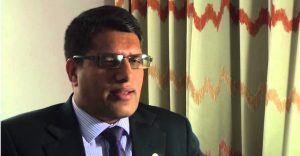
-Khimlal Devkota
Senior advocate/CA Member
1 BACKGROUND:
Nepal a country passing through a decade long armed conflict achieved constitution through constituent assembly in 2015. Several untold stories are behind the constitution making process. Country was ruled by King with constitutional monarchy and parliamentary democracy since 1990. Maoist insurgency started by 1996 after the promulgation of the 1990s constitution. Simultaneously war and negotiation had been conducted. Second round of negotiation the demand of election of constituent assembly had introduced as of bottom line. Being a lawyer, I was heavily engaged to defend the rights of detainees finally during the time of emergency security forces detained me. When released from the prison by the ordered of the Supreme Court, I decided to go for underground. I went to base area and started the journey of constitution drafting in my life. Initially people’s republican constitution was in my priority. Negotiation came in conclusion that the new constitution will be in place from elected representatives – (CA). Therefore, parties agreed to hold election of constituent assembly in stipulated time by interim constitution. Interim constitution drafting committee had formed by the negotiating team in 16 June 2006. Interim Constitution drafting committee chaired by Justice Laxman Aryal, Sindhunath Pyakurel,Harihar Dahal, Mahadev Yadav, Shambhu Thapa and Khimlal Devkota was a member. My journey had started formally by the date of 16 June 2006. Mandate was to be based on preamble of the code of conduct separate document issued by negotiating team. Time had given 15 days. The process was the drafting committee has to present to negotiating team and negotiating team will be put forward to high-level negotiation.
2 CONTENT OF THE INTERIM CONSTITUTION
Same day high-level agreement was to dissolve the then reinstated parliament and peoples power established by Maoist party including people’s court. Debate was either amendment of the existing constitution by open up path of election of constituent assembly or totally new interim constitution by repealing existing one. However, the drafting committee was mandated to draft a new interim constitution. Issues of Monarchy, forms of government, electoral system and judiciary were most contentious. All contentious issues remain same the draft was handover to negotiating team. My position was both in drafting committee and political negotiating committee. People’s court vs. Constitutional court was in tuff, finally concluded into constituent assembly court. Peoples court was indirectly accepted rest of the issues resolved by high-level negotiation such as monarchy by first meeting of the constituent assembly in simple majority. Interesting debate was on electoral system. Maoist party was for full PR but NC and UML were full FTPT. Compromised has done 60/40. The result came with just opposite. PR system favored to NC and UML and FPTP favored to Maoist Party. Judiciary minor changes have been done just to reform in composition of judicial council. Representative of Nepal bar Association and prime minister also included in the council.
3 CONTENT OF THE NEW CONSTITUTION:
Most of the issues have been finalized by the interim constitution except forms of governance and judiciary. A form of governance was accepted in first CA as a mixed system directly elected president and parliament elected prime minister. Federalism was most debatable one. One section of the society believes that it will be a cause of division of the country and other section of the society believes federalism will be a matter of national integration like Nepal as a country of diversity. Pluralism was another bone of contention. Maoist party believes on monism, it means truth is single. While others who believe on pluralism they mean there are multiple truth. On Judiciary it was huge debate. As it is, existing judiciary vs. parliamentary committee-controlled judiciary was in contentious one. The compromised solution was separate constitutional court in addition to Supreme Court. The form of governance high-level committee has given a task to the taskforce, headed by Laxman lal Karna. Others members were Radheshyam Adhikari, Agni Kharel, Sapana Mall and I.
3.1 CONSTITUTIONAL BENCH:
My position for compromise solution was separate constitutional court to reform existing judicial system instead of status quo or parliament-controlled judiciary. Interestingly the decision was taken by high-level political mechanism including taskforce. Coincidence was that, in the meeting I was single representative of the then Maoist party. Meeting was chaired by Ram Chandra Poudel. Most of the members said that in absence of the Maoist top leadership it is impossible to take any decision. My position was different. I started to speak let’s go for constitutional court for the compromise solution. Meeting was pin dropped silence. Chaired asked me is its sure Maoist top leaders will accept it? Then my answer was yes. I am here who solely representing the Maoist party. The constitutional court was decided. However, second CA slightly changed it in to constitutional bench within the Supreme Court. The jurisdictions have been given to the constitutional court was carryout as it is by the constitutional bench of the Supreme Court.
3.2 FORM OF GOVERNANCE:
Next bone of contention was form of government. The debate was parliamentary system vs. Presidential system. I was strongly in favored of directly elected presidential system. My opponent opinion was continuation of the existing parliamentary system. I was strong advocates of directly elected executive presidential system. I had a strong logic i.e. political instability, underdevelopment, corruption and so on. But others were in favored of existing parliamentary system with the logic was a system which is tested, practiced and used to. The debate of Parliamentary vs. presidential system was not only a bone of contention but bottle neck for the completion of the constitution making process. We compromised in mixed system for face saving to both and making possible to finalize the constitution. The compromised solution was win-win for everyone. However, second CA slightly changed it in to reformed parliamentary system. A parliamentary system with certain restrictions, intended to overcome from political instability. Such as dissolution of the parliament is a prerogative of the prime minister. It is a core element of the parliamentary system, which has been removed from the constitution. No confidence motion is not allowed for two years and not allowed for second proposal within a year if once the proposal of no confidence motion was failed. Number of Minister was fixed in constitution. Defeated candidates are not eligible to be a minister for the whole tenure of the parliament.
3.3 FEDERALISM
Federalism debate was largely divided in identity based and viability based. Finally, federal design was done identity and viability based but identity has taken first priority. Number of meeting has been conducted for federal design but almost all failed to reach conclusion. Later on, debate shifted towards name number and boarder. When final design of the federal structure each and every leader confined their own constituency and agreed to not to division of the district except Rukum and Nawalparasi. Interestingly, debate was started by integration and disintegration of the country however issues landed at non division of district. Political debate confined with people’s aspiration of their constituencies.
3.4 PLURALISM
The issue of pluralism was a philosophical question. Maoist believes on monist and others were in favor of pluralist. Classical debate was hampered the constitution making process. Peace and constitution agenda were handicapped time and again by tiny issue like pluralism, identity and viability and others. My stand was always in favor of peace and constitution rather than classical debate. Finally, we tried to dilute the debate by explanation in explanatory note of preliminary draft and concept note. Nepal is a country as a full of diversity. Nepalese society itself multiple characteristics and based on plurality.
4 UNFINISHED TASK OF THE CONSTITUTION:
It was a last day of the first constituent assembly. The tenure of the constituent assembly has been extended fourth time. Supreme Court has given a mandamus either complete the task or go for alternative within the timeline. Constitution was incomplete because of party’s leadership. Though, we four of us were engaged in proof reading of the finished task of the constitution to promulgate the constitution until midnight. Parties were confused and situation was out of control. My proposal was to promulgate the constitution whatever we have agreed upon and declare complete constitution writing process for honor of the court decision and starts constitution building process for fine tuning. Leadership failed to reach consensus then our efforts also came in to useless. That unfinished task of the constitution was never finished as per the spirit of the 1st CA.
5 REPUBLIC PROPOSAL:
After completion of the election of the constituent assembly the first meeting of the CA had to take a decision of the faith of monarchy as per interim constitution by simple majority of the house. Procedure was not developed as required. Declaration of republic was a Hercules task for those who were not clearly announced in their election manifesto. Leaders had given a task for the taskforce including me. My proposal was let’s put forward republican declaration proposal first and pass the resolution to vacate the palace within the fifteen days. Finally, the proposal prepared by taskforce including me and approved by the high-level meeting and indorsed by the first meeting of the CA as it is. According to that proposal Nepal was declared republican and removal of Monarchy was possible.
Before declaration of republic, there was hue and cry. If CA declares republic at the same time Maoist YCL will take revenge against the king and unwanted bloodshed will take place. Therefore, leaders were hesitating to do so. Very secrete talk have been done with the royal Nepal army with the help of senior facilitators. The secret talks concluded in tacit understanding that CA will declare republican and proposal will be pass to facilitate the king for graceful exit and Maoist YCL and others will not paid any attention towards Palace and King. Only after that leadership became ready to call the meeting and declare republic in CA.
6 UNRECORDED EVENTS OF NEGOTIATION:
Negotiation was a tuff job of the Nepali politics. The violent Armed conflict transform to peace, constitution making through constituent assembly, restructuring of the state and forward-looking socio-economic transformation. Trust was a key. Several times because of trust deficit reflects during the drafting comprehensive peace accord, interim constitution, army integration and election and making new constitution. The first meeting was held for comprehensive peace accord. The Parallel draft were presented and which draft has to be followed was an issue of the differences. Definition of nation was another debate for a week long. Army integration and rehabilitation was another bone of contention. Election date and meeting of the elected constituent assembly, amendment of the constitution and power sharing were the most contentious one. Federal design was a different story vertically divided in to identity and viability. Name number and boarder were confined the whole debate. Fortunately, I was part of peace and constitution making process. Our process is unique though we don’t have proper record. Therefore, just I can say, it was happened as per my own memory.
7 CONCLUSION:
As a member of Constituent Assembly, I always stand for Peace and Constitution rather than indulged in worthless rhetoric classical debate. Peace and constitution were prime business of the country since almost 20 years. Armed conflict to peace, authoritative monarchy to democratic republic, Unitary to federalism, Hindu kingdom to secularism and exclusionary to inclusionary state was an unforgettable journey of Nepali politics. These all achievement has been institutionalized in the constitution with very crucial and artistic role of key leadership. Now we are here in federal democratic republic of Nepal which is a precious result of tireless struggle and sacrifice. Such a precious process I have been involved and contributed more or less which is rarely recorded just that one wanted to remind to the readers. Many events and information and experiences have to be come out for the benefit of the nation and people for socioeconomic transformation.